Your computer, wherever you are.
One calm home for everything you do, on every screen you own, with Solis, an assistant you can trust to run it.
Everything your computer is for, in one place.
As simple as a games console, as capable as a workstation. This is the real Home.
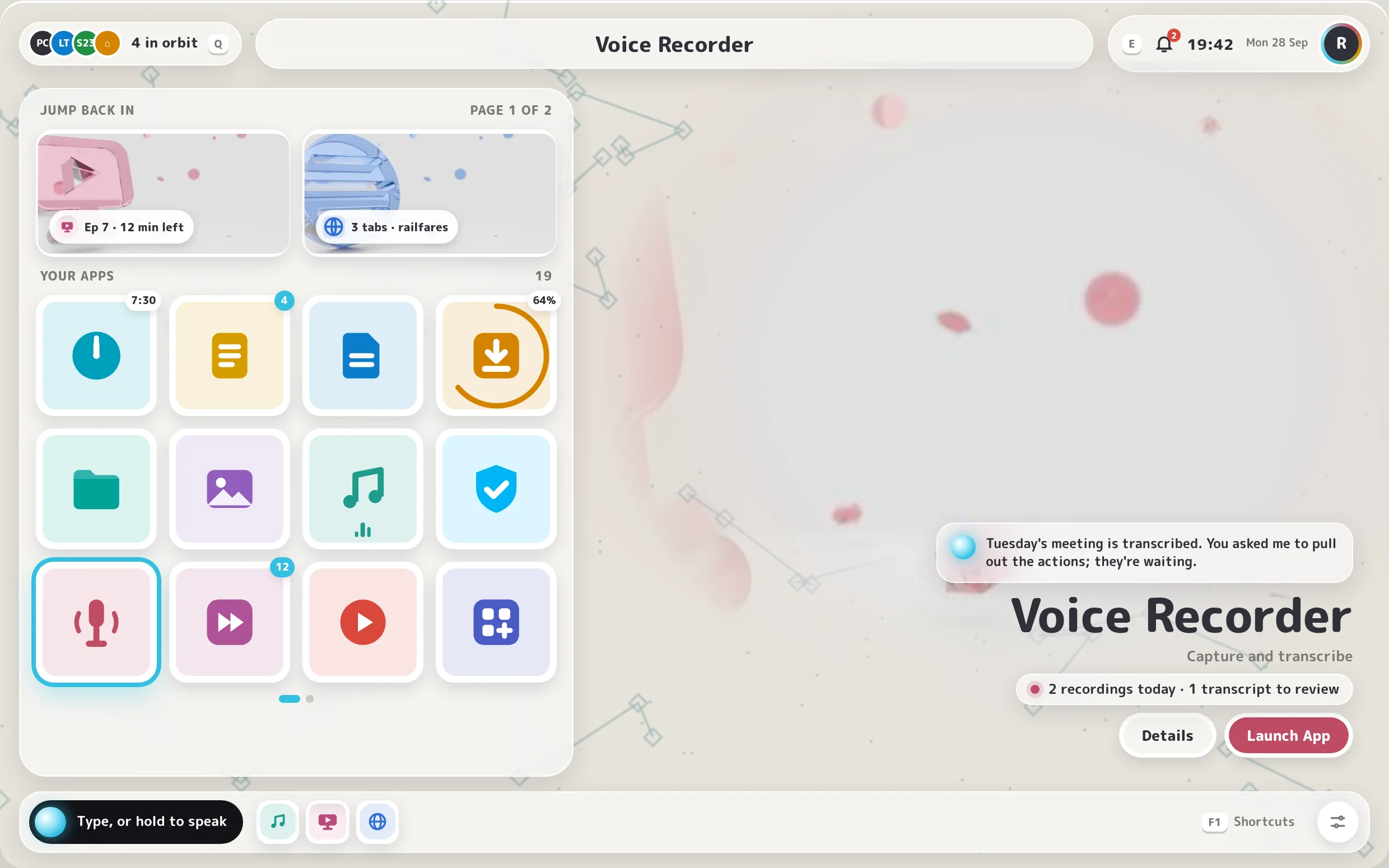
- 1Your devices, in orbitEvery device you own, one tap away.
- 2Jump back inWhatever you were doing, on whichever screen.
- 3Your AppsBig tiles, a controller if you like.
- 4A word from SolisOnly when it has something useful.
- 5Talk, or typeSolis is always a word away.
Music
Like Spotify, for your own library, and it plays over everything.
An assistant with real reach, and real limits.
Solis lives inside POLARIS. You talk; it answers in a heartbeat and does the work. You choose how free it is, and some lines it never crosses on its own. Not one for AI? Everything in POLARIS works without it.
POLARIS's rules first, then Solis's own judgement: what it's sure is safe goes ahead, the rest asks.
- It can't rewrite its own rules. They're sealed, and put back if anything changes them.
- It only remembers what you actually said. Nothing on a web page can plant itself there.
- Big jobs run on a copy, and you look them over once before anything real changes.
Every device you own, sharing what it has.
Fabric joins your devices into one computer. Each one brings six foundational resources, and lends them to the others whenever they're needed.
Internet
Every connection, pulled together.
A big download pulls over your home broadband, the café Wi-Fi and your phone's 5G, all at once.
GPU
The graphics card, lent where it's needed.
Ask your laptop something too big for it, and the desktop's graphics card answers. It's handed back the moment you start a game.
CPU
Spare processing, shared.
Recording a lecture on your phone? The desktop does the heavy lifting, and the phone's battery is spared.
Storage
Every drive, one place.
The old laptop in your drawer becomes 480 GB more room, reachable from everything you own.
Sensors
Cameras and microphones, lent with your say-so.
An old phone becomes a security camera that understands what it sees. The laptop's microphone hears you across the room.
Input
One keyboard and mouse, every screen.
Push the pointer past the laptop's edge and you're typing on your phone. The clipboard comes too.
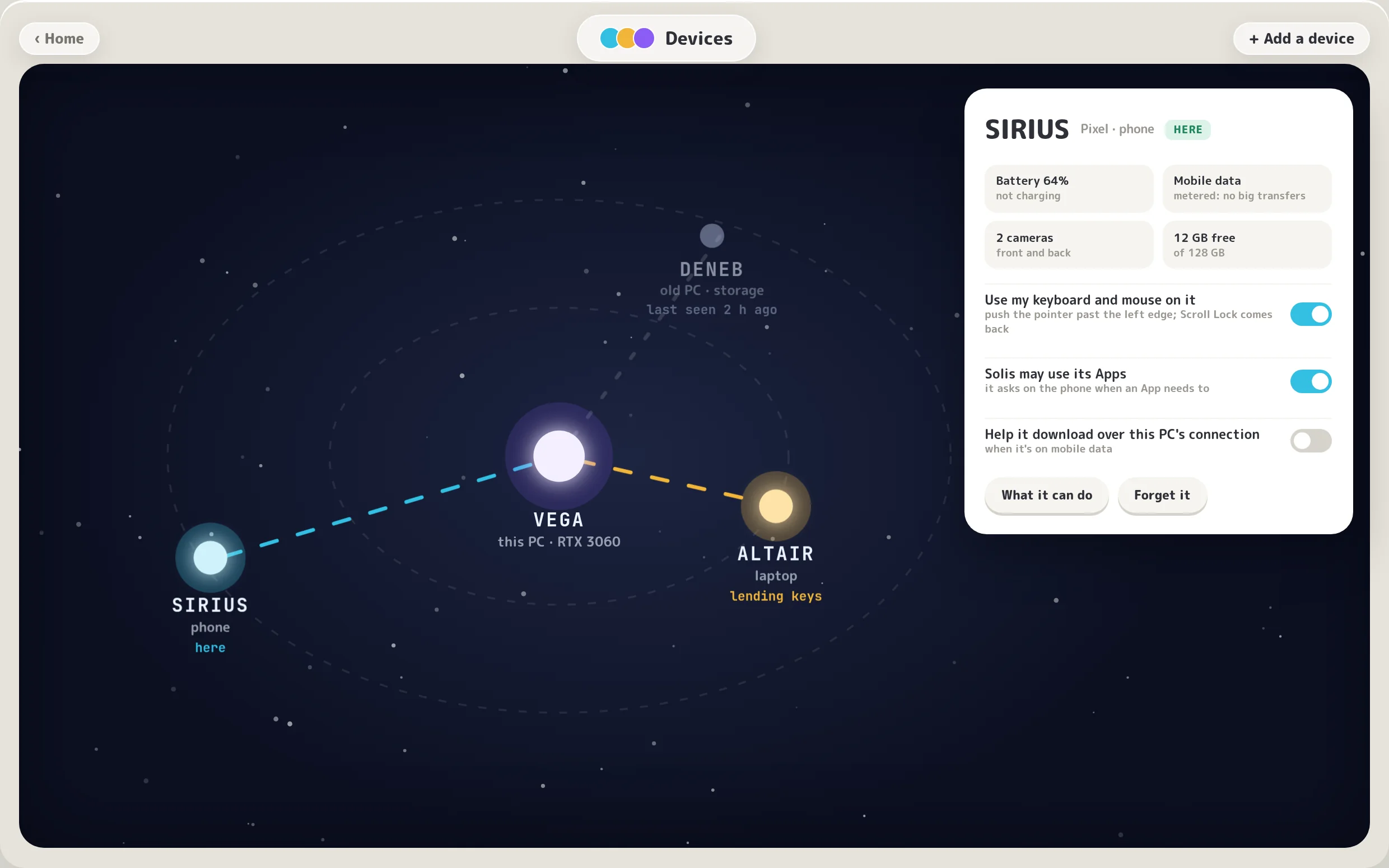
Telescope shows it all.
Every device is a star in one sky, the same on every screen. The lines between them are what they're lending right now, and each card says what a device can give.
Every lend is recorded on both devices, the camera and microphone always ask, and you can take anything back with one tap.
Your PC, as a cloud computer.
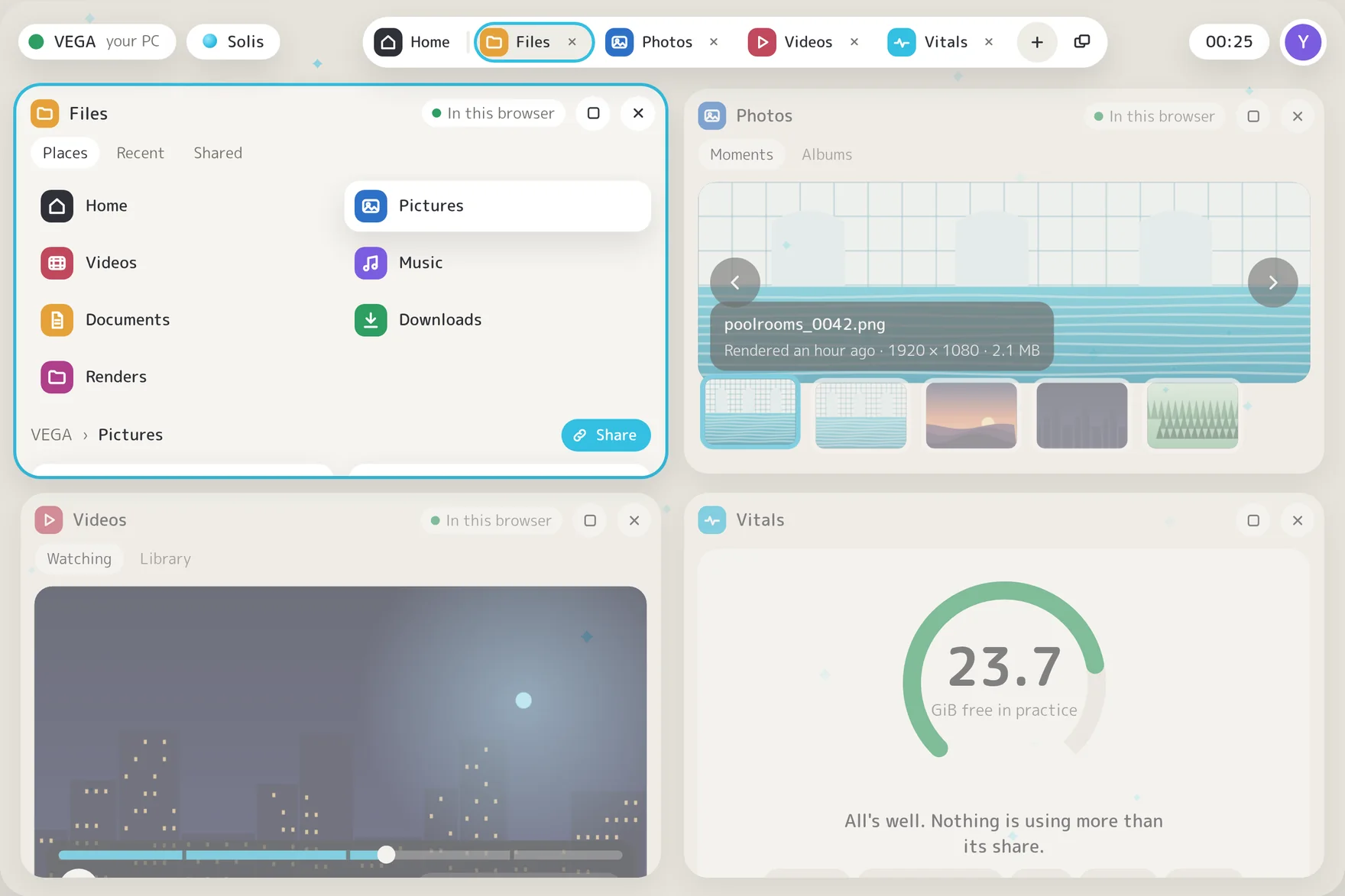
Open any browser, anywhere, even an old one, even with scripts off, and your PC is there: its files, its films and its apps, side by side. Nothing to install on the device you're using.
PRISM works with POLARIS, or entirely on its own, on any PC.
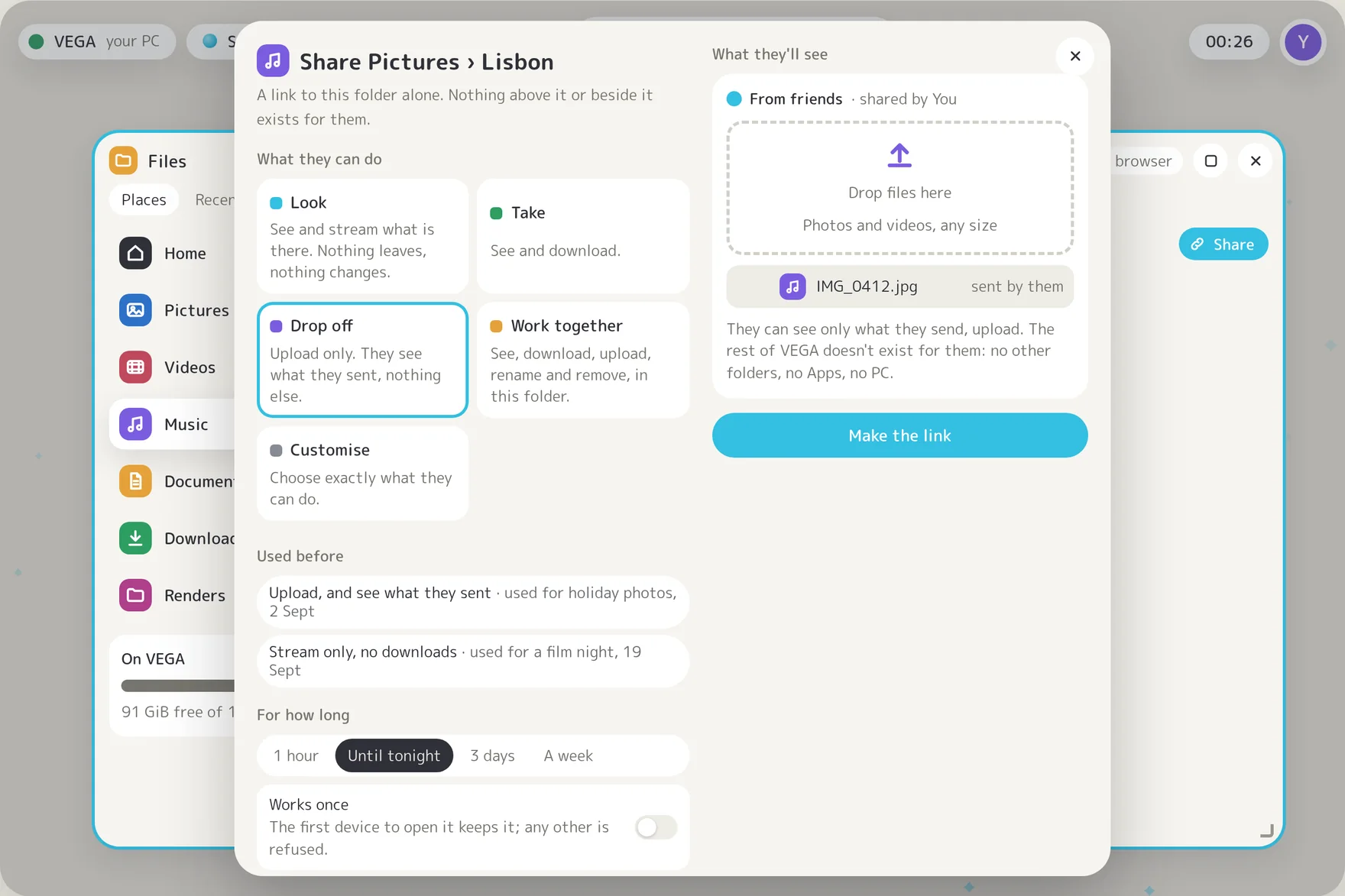 Share exactly one folderFor exactly as long as you like. Nothing above or beside it exists for them.
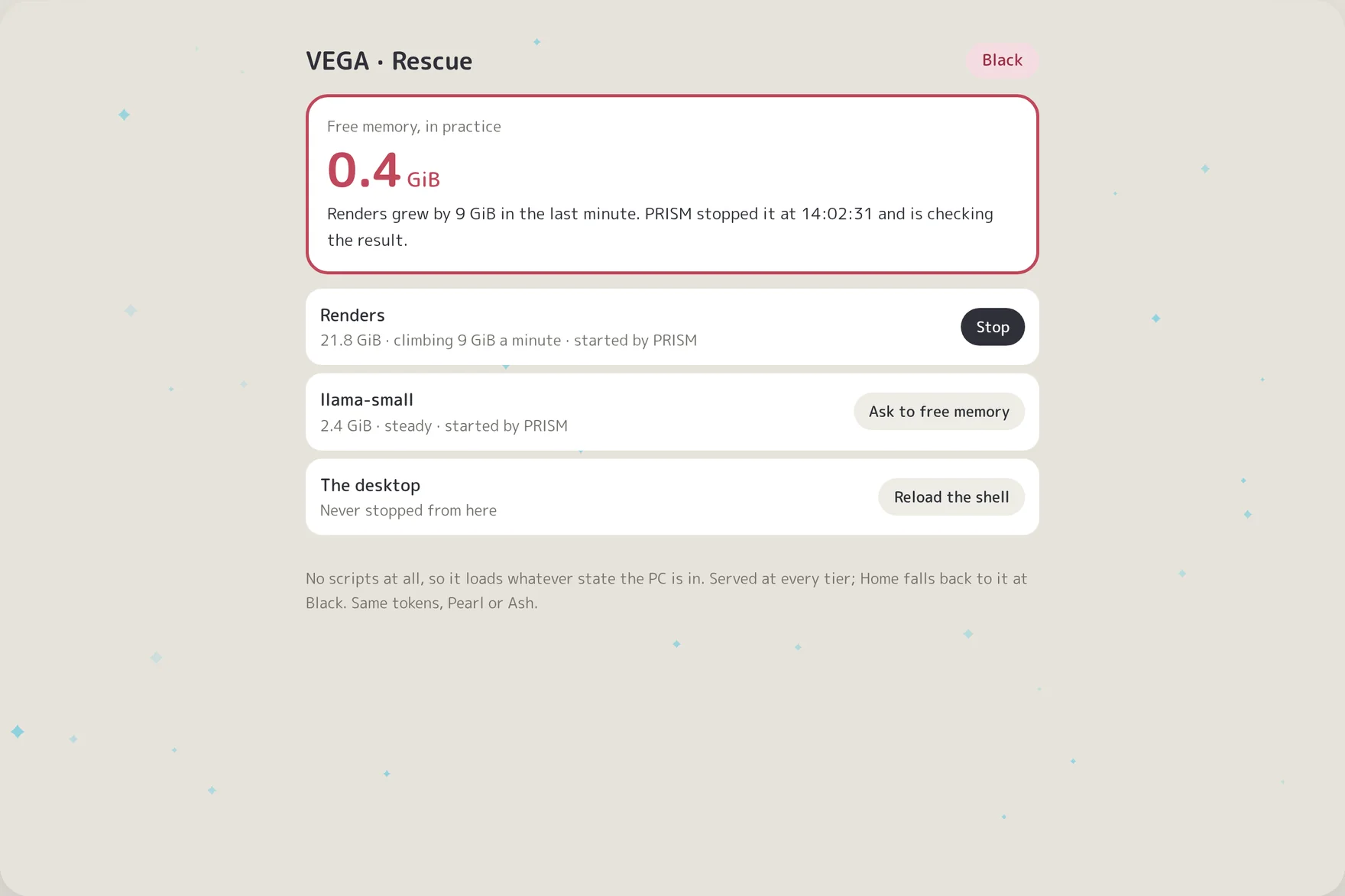 It keeps your PC healthySomething runs away with the memory while you're out? PRISM stops it, and tells you.
Replaceable all the way down.
AI moves weekly. Every part of POLARIS can be swapped for something better, and your memory, settings and Apps stay exactly where they are.
Build AI apps without the AI bill.
Your users' own subscriptions power your app's AI. You never hold a key or pay for a token.
- An agent and a voice, already there
- Every device your users own
- Every platform, from one codebase
- POLARIS's own UI parts: finished on day one
- Ship inside POLARIS, or on its own with POLARIS inside
runtime = 1
id = "recipes"
name = "Recipe Box"
summary = "Cook what's in the fridge"

[appearance]
accent = "E0623A"
glyph = "bowl"

# What your App can lean on. POLARIS brings it all.
requires = ["solis", "voice", "fabric"]

[[faces]]
id = "recipes-screen"
kind = "window"
An App is a folder and a manifest like this. Write it once, and it runs everywhere POLARIS does, using whatever your users' devices have.
Built in the open, marked honestly.
Linux
POLARIS and PRISM, being built every day. The Home, the Apps, Solis, Telescope and the voice all run today.
Windows and Android
POLARIS on the machines you already have, and PRISM reachable from anywhere on the internet, safely.
Defence that's yours
Attacks used to be code and con artists. Now they're agents. Your defence should be too: an antivirus that understands what it's looking at, owned by you.
It started as JARVIS.
I set out to build an assistant I could talk to that would actually run my computer for me. I soon found that no assistant can be better than what it can reach, or safer than what contains it.
So I built what it reaches, then what keeps it in check, and made every part replaceable so it wouldn't be out of date in a year. Somewhere along the way it stopped being an assistant and became the place I use my computer.